
How To Watch Movies During The Day
You don't have to watch that one with curtains closed.
By Tino Hluyo · · 6 min read
Sunset, 2019.
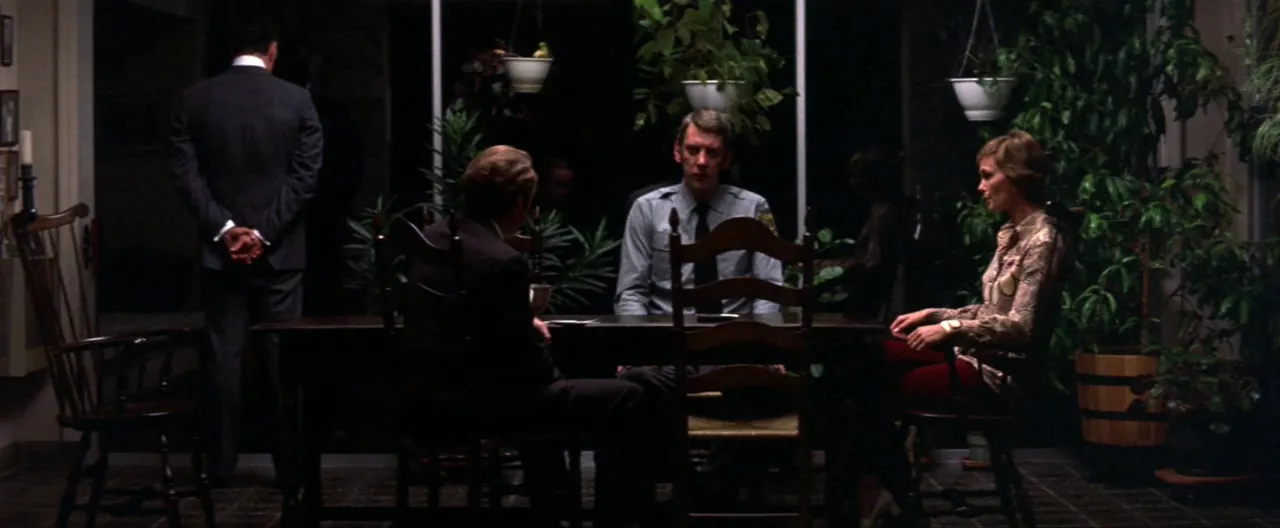
During one lonely summer dusk that probably took place somewhere between January and April (the ease of my gap year made it hard to keep track of those repetitive, passive days) I switched on my TV and played a pirated Blu-ray mp4 of Alan J. Pakula's Klute (1971) starring Donald Sutherland and Jane Fonda. I still remember that moment fondly.
The rolling winds flowing through open living room windows, all seeming to fall from a purple Joburg sunset that would not go on with its setting once the film began (Gordon Willis’ dark, saturated cinematography caught both our eyes within the first five minutes) and a gentle laughing dove calling to let you know the day was done and the time to rest is now, all made the experience watching Klute something lively and impossible to replicate.
In the cinema you can not catch that feeling. It doesn't depend on the size of your screen or the people you might find yourself watching it with. In fact, experiences like this are much easier to find in total solitude.
Within your own space, an unfathomable array of film-watching combinations present themselves. Should I watch this with a cup of tea or a full plate of dinner? Should I watch it alone or as part of some free-willing weekend marathon? With subtitles? Completely dubbed? Stoned? Sober? Drunk? Most important to my essay is of course the question of time.
When would I like to slip into this invisible stream completely detached from the world for two hours (or even more)? What fewer people ask is whether or not said slipping should even happen while becoming completely detached. What if the external world, the “real” world, could act as a healthy supplement to your personal journey with an artist and their creation?
To cycle back to Klute, the choice to see it in a hazy, open situation wasn't one that was planned. It's hard to predict such a thing, but there's a reason why I still remember it to this day. Not only the film and what it entailed, but- through all five senses- how it felt that summer sunset.
While trying not to overexplain it to the uninformed, Klute starts out as most noir films do: within darkness. But to all informed (and those familiar with Gordon Willis’ work as a cinematographer), you'd be well aware that Klute's sultry summer essence isn't based on when it's set but how luscious both its night and day scenes are.
Gordon Willis, better known for his work on all three The Godfather films, was a master in bringing life to darkness. Throughout his numeours partnerships with Francis Ford Coppola, Alan J. Pakula and Woody Allen to name a few, there is some immediate and undeniable sensuality in how he lit both his actors and frame.
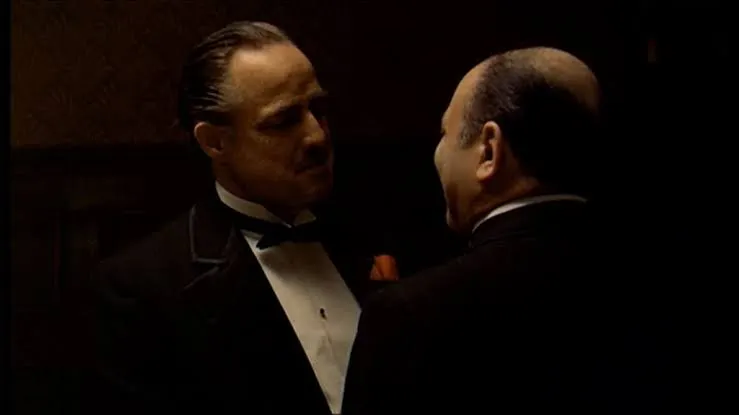
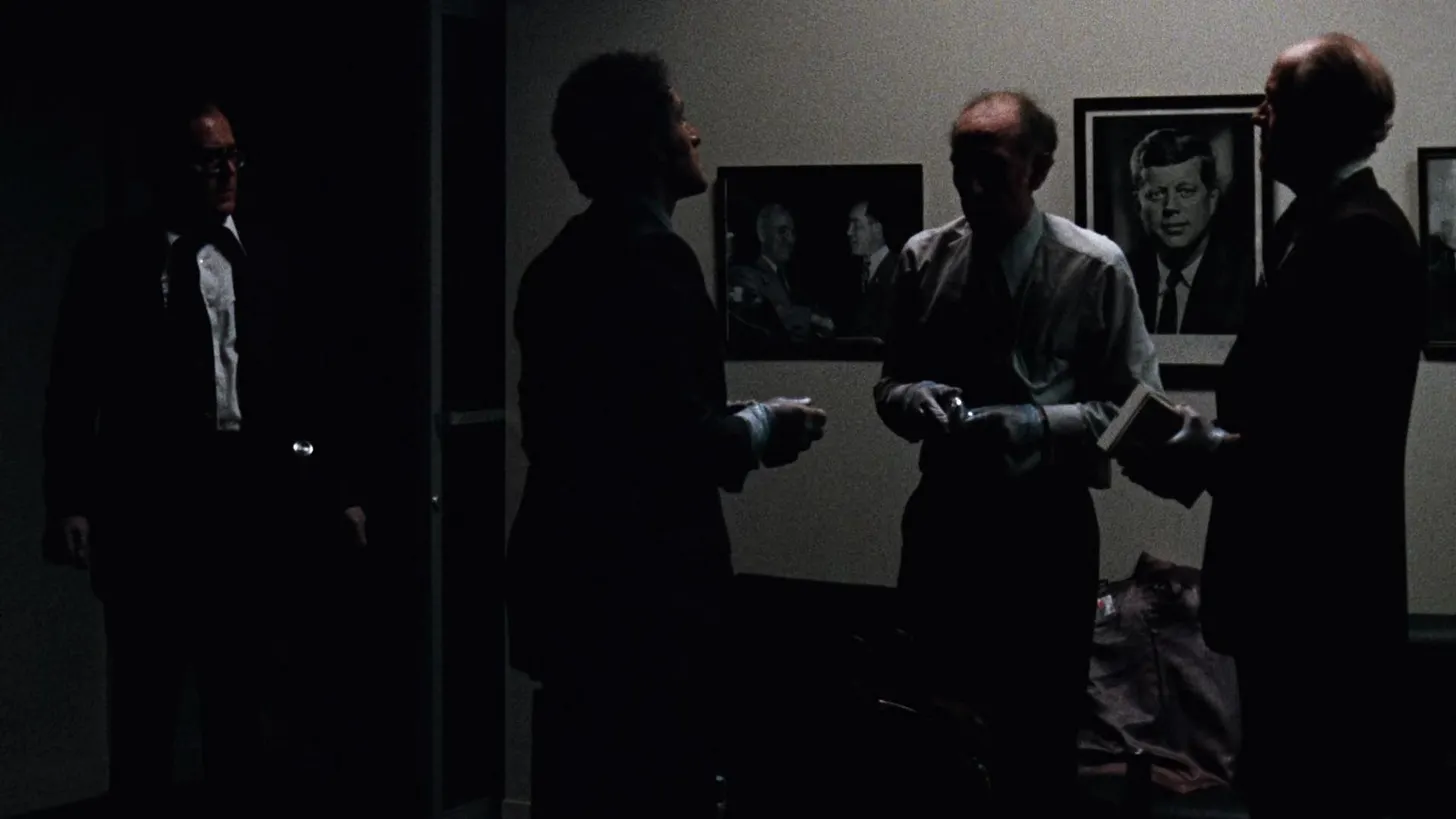
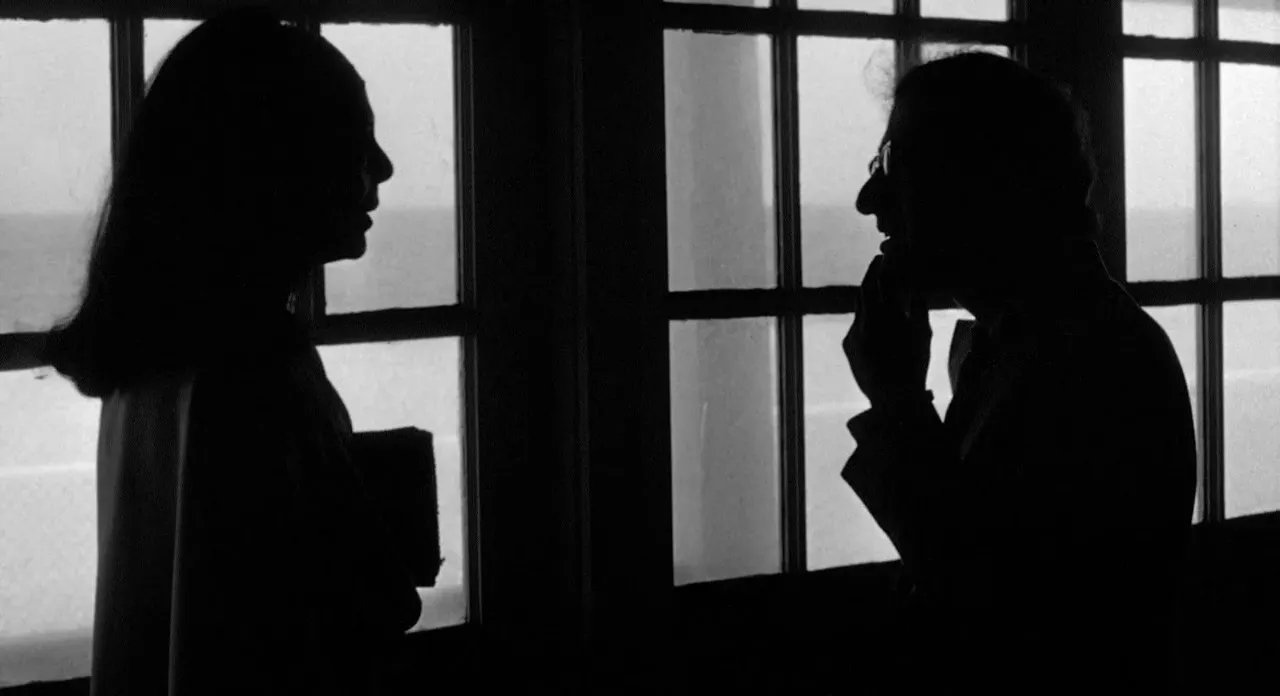
This sensuality and fearlessness concerning shdaows and “underexposing” the frame is what safely assures me on Gordon Willis being one of our kings of the Sunset Film.
Within dusk itself, the human eye still sees its surrounding landscape with near-daytime clarity, while running into nighttime's crawling shadows brought on by the sun lowering behind an iron horizon. This was Willis’ unbreakable philosophy: to bring the audience their well-deserved and much-needed visual information while granting them the choice to embrace the shadows this information brings.
This leads me to next and central talking point. Instead of whether or not a film focuses on daylight, sunsets or the evening shadow to decided when best to watch it and where, its relation to how nature is presented is more honest and worthwile in deducing whether it's a day movie or not.
This requires an essay on its own. To put it simply: pace, colour, intensity or its lack thereof, high/lowkey lighting and many other aspects all determinea film's relation to nature. For our Instagram faithful's, we'll compare two photos on our social media page to assert how tiny these differentiations can be.
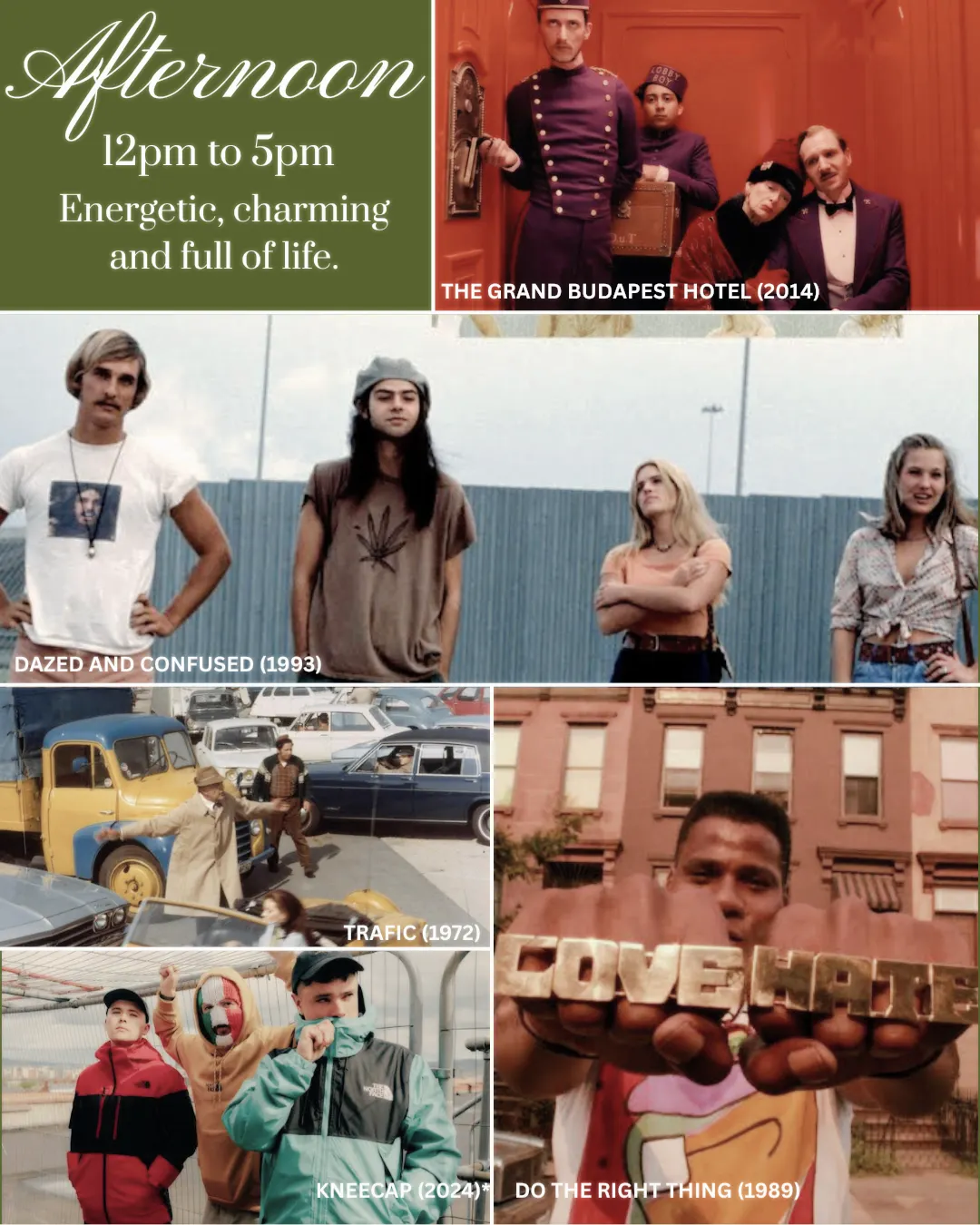
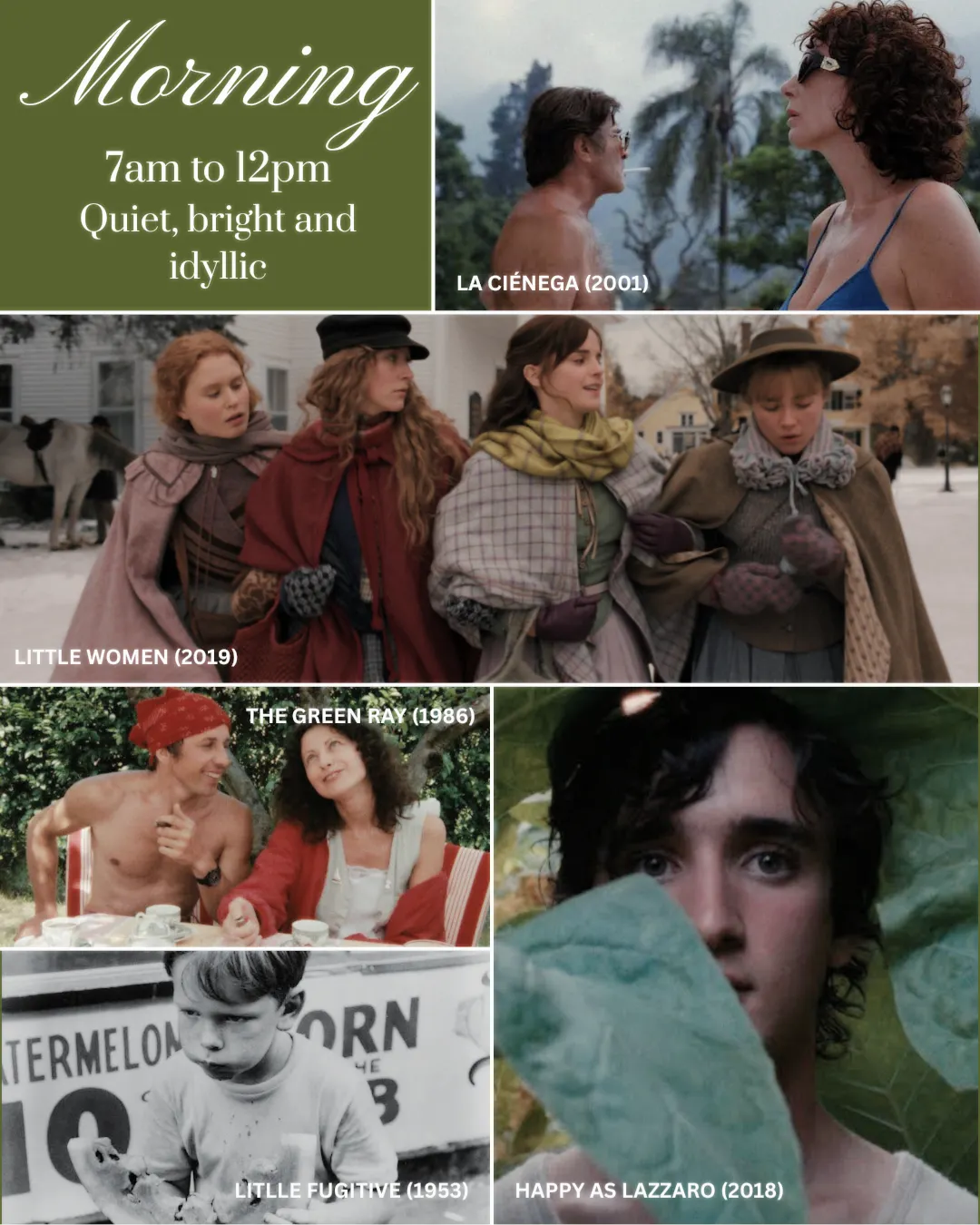
You might ask how to differ these two photos above (at least I hope you will). In both their settings and narratives, an Afternoon Film might very well be a Morning Film if you watched it on a different day, so what gives? Well an Afternoon Film approaches nature and reality with a more active and involved approach, afflicting humanity's liveliness onto its own setting.
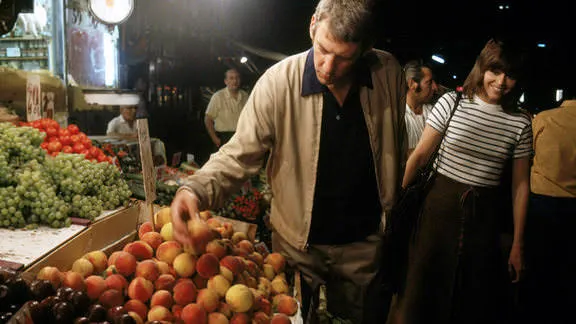
Trafic (1972) and Do The Right Thing (1988) , for example, not only push the rush of human society onto you - with either Spike Lee's rapid day-of-the-life visual style or Jacque Tati's Rube Goldberg approach to modernity's hyperactive social ecosystems - but they make you as the spectator the final part of it.
You are an active audience with Tati or Spike, requiring an energy one doesn't usually hold by the end of day or before they've had their morning coffee. It is an active effort to watch their films, which isn't too hard to do because…come on we're talking about just watching films here, though it is still best at its effort with churning and warmed up brain.
Hopefully, this sheds some sufficient light on what constitutes an Afternoon Film - or, rather, which experiences validate the distinction. We can't be certain on what films were made to be watched at what times, and with the advent of streaming, we can't even be sure on what screens today's films are meant to be played on.
Nonetheless, as I've professed here in our very first article (which you should read if you haven't), the audience is the “final draft” of every film ever made. Your approach, both as a psychological response to what's on screen and the context in which you see it, is all up to you.
Take another example; the Morning Film is a slightly more mature variation of the Saturday Morning Cartoon, both hinting at a category only achieved in retrospect. While yes, most Saturday Morning Cartoons quite literally played on some channel at some time before 12pm on your weekend mornings, popular culture has assigned the term to an unedning pile of unofficial “vibes” and “cores”.
Whether it's the free-willing nature within most of these programs or some slightly absurd but comforting essence they gave us half-awake with a bowl of Corn Flakes cupped onto our laps, these cartoons are all threaded by some feeling you wouldn't get watching the same thing at 8pm on a Tuesday.
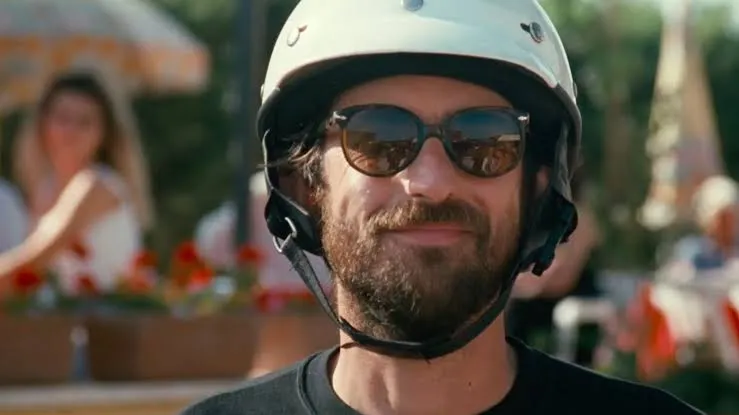
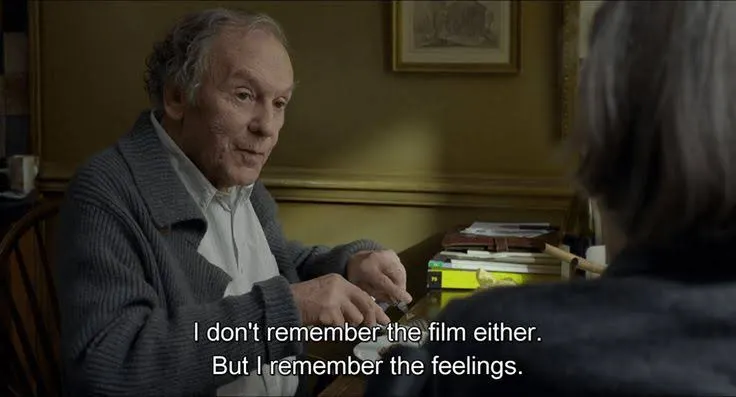
Caro Diario (1993) comes to mind as a personal Morning Film favourite. Jubilant, highkey and consistently calm despite its tiny quirks. It's best watched with the sun just recently crawled out of its own slumber, and you out of yours, and its rays silently slicing your tabletop TV by the bottom left corner. It's homely, serene and slightly sensual if you'll allow it to wash over you.
And wash over it must, but not without your curatins open, eyes still crusty and every morning bird still soothing the air. That's how you watch a Morning Film.
Now, we could continue to go over every part of the day and what films find their place in each, but things would quickly turn redundant. Not only that, but a post like this can only turn more and more subjective until we're discussing feelings and experiences that barely any of our readers could latch onto (not exactly because it's not relatable, but that it's hard to find words to give them justice). We're grateful for your patience in awaiting another Substack Saturday post (on a glorious Sunday night) and, as always, we would appreciate a restack and like to get the word out for us. We hope you enjoy the week and ahead and we'll see you at the movies!